/How Are Latex Gloves Made Step by Step in Factories?
How Are Latex Gloves Made Step by Step in Factories?
Jun 26, 2026
Understanding how latex gloves are made step by step gives buyers valuable insight into what separates a reliable product from a substandard one. While the process may sound straightforward, it involves multiple precisely controlled stages, each requiring specialized equipment to ensure consistency and quality. At the heart of this operation lies the latex glove production line, a carefully engineered system that transforms raw liquid latex into finished, inspection-ready gloves.
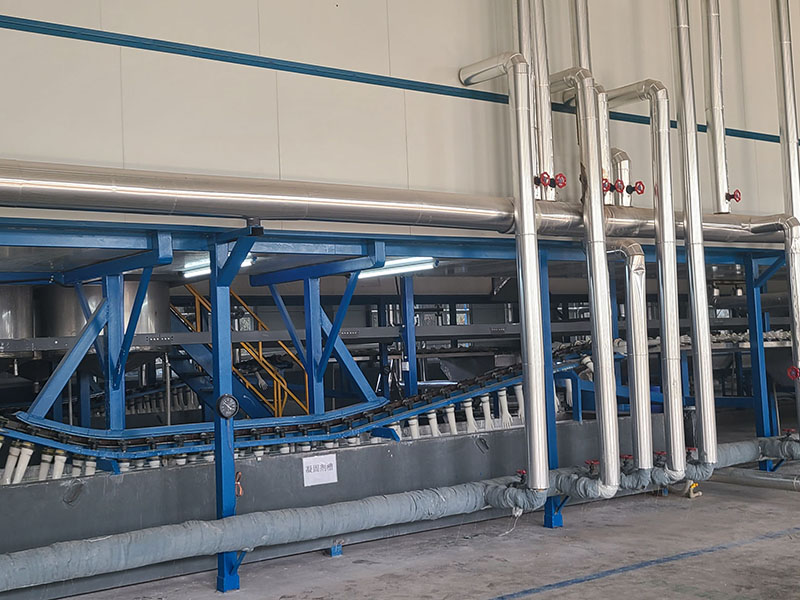
The journey begins with compounding, where natural latex is mixed with vulcanizing agents, stabilizers, and other additives to achieve the desired balance of strength, flexibility, and aging resistance. This prepared compound is then transferred to large dip tanks along the automatic glove dipping machine. Clean ceramic formers—shaped exactly like human hands—are first dipped into a coagulant solution, then slowly immersed into the latex compound. The dwell time, withdrawal speed, and room humidity are all tightly regulated to create a uniform film thickness across every fingertip and palm.
Once the latex layer has gelled, the formers travel through a series of drying ovens and leaching tanks. Leaching removes water-soluble proteins and residual chemicals, which is essential for reducing allergy risks and improving comfort. The gloves then enter a curing oven where heat cross-links the rubber molecules, giving the material its final mechanical properties. This entire sequence is synchronized by the glove production line's conveyor system, running continuously at speeds optimized for both output and defect control.
After curing, the gloves move to the stripping station. In modern facilities, this step is handled automatically by the latex glove making machine, which uses a combination of air jets and mechanical fingers to peel the gloves off the formers without tearing. The stripped gloves then go through visual inspection, air inflation testing, and sometimes electronic pinhole detection before being powdered or chlorinated for easy donning. Finally, they are paired, folded, and packed by automated packaging units.
Quality control checkpoints are embedded throughout the entire process, not just at the end. Parameters like tensile strength, elongation at break, and thickness are monitored batch by batch. A well-maintained fully automatic glove production line with real-time sensors can flag deviations immediately, preventing large-scale defects before they occur. This level of integration is what makes modern latex glove manufacturing both efficient and reliable.
For anyone sourcing latex gloves or planning to set up their own production facility, understanding these steps clarifies why the choice of equipment matters so much. A well-designed production line doesn't just make gloves faster—it makes them better, batch after batch. And in a market where end-users expect both safety and comfort, that consistency is what builds lasting trust.
Discover a range of high-performance glove production machines meticulously engineered to meet the diverse needs of our clients. Our machinery is designed to enhance production efficiency and product quality.
Experience the future of glove machine assembly with our advanced production lines. Our assembly lines are crafted to optimize your production, ensuring seamless operation, increased output, and consistent glove quality. With customizable features and precision engineering, we offer solutions tailored to your specific requirements.